
Balancing Everyday Student Life – TOAS x Varala 💚
TOAS and Varala are implementing the Balancing Everyday Student Life collaboration project, which aims to support students’ well-being and ability to cope with daily life.
In spring, a tenant well-being survey was conducted at TOAS Hippos. The survey highlighted key factors that support well-being, such as physical activity, sleep, nutrition, social relationships, and the importance of personal time. The biggest challenge in everyday life was identified as study-related stress. Based on the results, students expressed a clear need for support in coping and strengthening their overall well-being.
From early summer until the end of the year, these themes will be addressed through the following focus areas, with the content implementation led by Varala:
- Recovery & Sleep
- Physical Activity & Resilience
- Nutrition & Student Budgeting
- Time Management & Daily Planning
- Stress & Mental Well-being
The themes include practical, accessible content such as short informational sessions, podcasts, and everyday tips. The programme is part of the Balancing Everyday Student Life collaboration project between TOAS and Varala, which will be piloted at TOAS Hippos.
Content will be published on TOAS’s social media channels as well as on this website for everyone to access. Stay tuned! 🎧
Support for housing-related challenges
💶 Options for dealing with financial difficulties and rent payments
- You can move to another TOAS apartment through the normal housing application process without having to pay overlapping rent for two apartments. As autumn progresses, more shared apartments become available throughout the city, especially in Hervanta where availability is often the best. Read more about applying here.
- If you are temporarily away from Tampere, for example due to studies or work, you may temporarily transfer your apartment to another person, provided that certain conditions are met. More detailed instructions and requirements can be found here.
- If you’re experiencing difficulties with rent payments, contact Intrum as soon as possible. You can ask, for example, about setting up a payment plan.
🏠 Housing counselling
TOAS also offers housing counselling services to help resolve various housing-related challenges or problem situations. You can read more about this here.
Please feel free to contact us without hesitation, small steps can already make a difference. Our goal is to find solutions that support your ability to study and help everyday life run smoothly at TOAS. You’re also welcome to contact us even if you’re unsure which organization is the right one to help with your situation.
Wellbeing content
Article compiled by Varala (5/2026) Recovery and sleep Student life often involves demanding balancing between absorbing new Sleep is often described for students as the “best performance enhancer,” as Sleep consists of different stages, each with its own function: The recommended amount of sleep for young adults is 7–9 hours per night. Sleep deprivation significantly impairs attention, memory, and creativity. Student life activates the sympathetic nervous system, increasing alertness Recovery is like recharging a battery: it is both physical and mental and However, heavy exertion should be avoided 3–4 hours before bedtime to allow Good sleep starts already in the morning. A regular daily rhythm is the If you can’t fall asleep within 15–20 minutes, get up for a moment and do Occasional insomnia is normal, but if difficulties continue for more than Exercises compiled by Varala (5/2026) Recovery diary For one week, record: Reflection: Reducing light: Calming down: No screens: Worry time: Regular sleep rhythm: 15-minute rule: Exercise for students: Relaxation exercises – mieli.fi 5-minute recovery momentArticle: Recovery & Sleep
▾
information, becoming independent, and managing social pressures. At this
stage of life, sleep and recovery are not just rest, but essential processes
that enable learning, mental wellbeing, and physical health.The importance of sleep for the brain and learning
it is vital for brain maintenance and processing information. During sleep,
the brain processes daily events and replenishes its energy reserves.
However, a delayed sleep rhythm is common: alertness often peaks in the evening,
which shifts falling asleep to late hours and makes early mornings challenging.
Even one night without sleep can correspond to functioning similar to having a
blood alcohol level of about 0.1%. Long-term sleep deprivation is a serious
health risk and increases the likelihood of depression, central obesity, and
metabolic disorders.Balancing stress and recovery
and triggering the “fight or flight” response. This helps productivity, but
constant overstimulation without recovery leads to exhaustion.
should take place throughout the day in the form of breaks. Physical activity
is an excellent way to promote recovery, as it reduces stress and improves
sleep quality.
the body to calm down.Practical tools for better sleep
cornerstone of sleep hygiene: waking up at roughly the same time every day
helps regulate the body’s internal clock.
something calming in another room until you feel sleepy again.When to seek help?
three months, it is considered chronic insomnia. It is advisable to seek help
with a low threshold through student healthcare, health centers, or the
self-care programs of Mielenterveystalo.Sources
Exercises: Recovery & Sleep
▾
What would you like to increase and what would you reduce?Evening routine path
Lighting should be reduced about two hours before bedtime, as bright light
increases alertness and makes falling asleep harder. Especially fluorescent
lighting and strong evening light can disrupt the internal clock. A darkened
bedroom is the optimal sleep environment.
Set aside time to wind down about two hours before going to bed and avoid
activities that increase alertness. Enjoyable hobbies, reading, or relaxation
exercises help reduce the increased sympathetic nervous system activity of the day.
Extended use of smart devices, computers, or television before bedtime exposes
you to bright light and mental stimulation, weakening sleep quality. Replace
screen time with calming activities such as listening to music or reading.
It is beneficial to write down and go through accumulated tasks and concerns
during a dedicated worry period (15–30 minutes) well before the evening. This
prevents thoughts from racing at bedtime.
Regularity is the cornerstone of good sleep: wake up at approximately the same
time every day, including weekends and days off.
If you cannot fall asleep within about 15–20 minutes, get out of bed and do
something calming (e.g., reading) until you feel sleepy again.
Try this evening routine path or design your own 3-step evening routine,
test it for 3 evenings, and write down: what worked, what didn’t, what would you change?Relaxation exercises
4 seconds in – 6 seconds out. The nervous system shifts toward rest.
Shake your hands and legs, roll your shoulders.
Look far away for 20–30 seconds.
How does your body feel? How does your mind feel?
Listen to a song, drink water, or do a few stretches.
Article compiled by Varala (6/2026) Exercise helps you keep going Students often spend their days sitting in front of a computer or a smartphone. This means being sedentary for long periods, which takes a toll on both the body and the mind. However, research shows that exercise plays a significant role in improving academic performance and boosting daily energy levels. It is not just about physical performance, but an effective way to maintain brain health and prevent study burnout. Exercise has an immediate effect on brain function: it boosts alertness and sharpens concentration and attention. Regular exercise has been linked to improved cognitive function. Exercise is an effective way to support mental well-being, as it reduces symptoms of stress and anxiety. According to studies, the risk of anxiety disorders can be reduced by up to 40% through exercise. Exercise is also linked to better sleep – it makes it easier to fall asleep and increases the amount of restorative deep sleep. Every bit of movement counts, and even short bursts of activity help keep you alert and maintain stable blood sugar levels. Just one hour of vigorous exercise per week is linked to lower levels of study burnout. Although exercise boosts your stamina, it shouldn’t become a new source of stress. Listening to your body, getting enough rest, and choosing exercise that fits your daily routine will help you find a balance where physical activity gives you energy rather than adding strain.Article: Physical Activity & Resilience▾
The effects of exercise on the mind and brain
Where to start? Tips for getting started with exercise
Incorporate physical activity into your school day
Remember to listen to your body
Did you know this about the effects of exercise?
Sources

Article compiled by Varala (9/2026) Student life brings many changes. You are responsible for your own daily routines, schedules and meals. Food has a direct impact on your energy levels, concentration and ability to learn. A regular meal routine is the foundation for maintaining your ability to study and stay alert. When you eat roughly every 3–4 hours, your blood sugar levels stay steady, which helps prevent tiredness and unnecessary snacking. It’s a good idea to start the day with a nutritious breakfast to fill up the energy reserves that have been depleted overnight. If you skip lunch or dinner because you’re too busy, you’ll feel tired in the afternoon, and by the evening your hunger may become uncontrollable. For university students, a subsidized lunch is not only economical but also a nutritionally good way to ensure you have the stamina to get through the day. Planning ahead makes even the busiest week easier: Each meal should ideally contain carbohydrates, protein, fat, and vegetables. This helps keep your blood sugar levels steady, keeps you feeling full for longer, and ensures you get nutrients throughout the day. The mind and brain need high-quality nutrients to function optimally. Research suggests that the quality of nutrition is linked to mental wellbeing and even the risk of depression. Eating calmly also helps maintain your energy levels. Taking time to relax during mealtimes without distractions, such as your mobile phone, helps you recognise your body’s signals of fullness and reduces stress. Article compiled by Varala (9/2026) Nutrition isn’t rocket science. It’s about consistency and making small choices that, together, help you keep going. In a student’s daily life, eating regularly and using the plate model are effective tools for managing stress. When you eat at regular intervals, your blood sugar levels stay stable, your concentration improves, and you’ll still have energy left even after a day of studying. The plate model is a visual tool that eliminates the need to count calories. It teaches you the right proportions so that your body gets everything it needs. The plate model serves as a framework that ensures an adequate intake of energy and essential nutrients. The model can be adjusted to suit your own needs. The basic plate model The vegan model is divided into three equal parts to ensure sufficient energy density and The plate model is the core of the meal, but the whole is made up of small additions: The athlete’s plate model When it comes to the diet of a student who plays sport and is very active, the most Rest days and days with very light training: A heavy training or competition day: Snacks and an evening meal: energy for the day and recovery at night Snacks are mini versions of main meals. They help maintain a steady energy level and prevent afternoon tiredness. Make sure your snacks include these four components: It’s also a good idea to use this four-point model as a guide when putting together your evening snack. A high-quality evening snack containing carbohydrates and protein supports recovery during the night and makes it easier to fall asleep.Article: Nutrition & Student Budget
▾Fuel for Your Brain – how to eat, stay energised and study better
A regular routine is the foundation of staying energised
Plan each meal wisely
Food and mental health
A checklist for a student’s daily life:
Sources
Article: How to Build Your Meals
▾How to plan your meals
The basic plate model and a vegan alternative
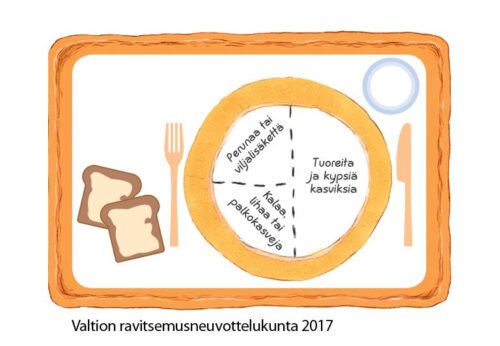
Vegan Plate Model
protein intake.
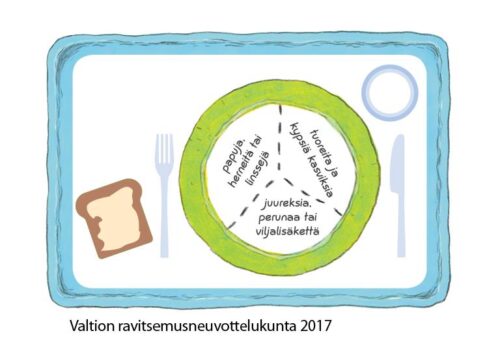
Remember the overall meal
Fats: Add an oil-based dressing or oil to your salad.
Drink: Skimmed milk, water or plant-based drink.
Bread: Wholemeal bread with margarine.
Dessert: Berries or fruit round off the meal.
important thing is to understand how energy expenditure varies. Carbohydrates are the
body’s primary fuel, so their intake should be increased as the intensity of exercise rises.
Adjust your plate model according to the amount of training you do each day:
Use the basic plate model. This is sufficient for days when the training load is low.
Moderate-intensity days:
The athlete’s basic guide. Suitable for days when the program includes 1–2 training sessions.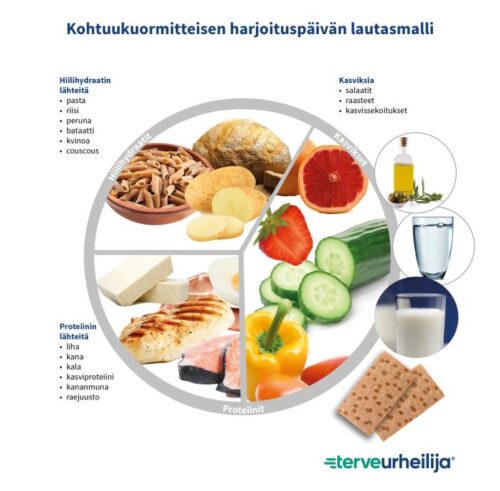
Used for high-intensity endurance activities or when there are two strenuous training
sessions in a day. The proportion of carbohydrates is increased to half the plate, with the
proportion of vegetables reduced accordingly.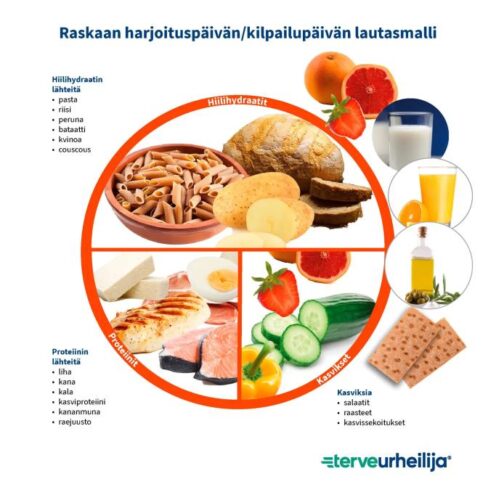
1. A source of carbohydrates (e.g. bread, porridge, cereal, muesli)
2. A source of protein (e.g. quark, yoghurt, eggs, cottage cheese, soya products)
3. Protective nutrients (vegetables, fruit, berries)
4. A source of fat (nuts, seeds, spreads)
🔗 Other Useful Links and Support
TREY offers students support with studies, wellbeing, livelihood, and housing-related matters. More information is available here.
Mieli Mental Health Finland provides approachable support for various challenging life situations. If financial issues or other concerns are weighing on your mind, you can contact them without hesitation. Visit Mieli’s website here.
Nyyti ry promotes students’ mental health by offering approachable support, activities, and everyday tools. You can visit Nyyti’s website here.
Ohjaamo Tampere supports people under 30 with everyday issues and future planning. You can get help with job searching, studies, finances, and managing daily life. Learn more about Ohjaamo’s services here.